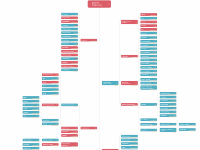
Linux
The software your computer runs
When you open a photo app or save a file, the computer needs basic software to coordinate programs and hardware. That software is the operating system: it manages resources such as the processor, memory, and devices, and gives apps ways to use them. Linux is a kernel used in many operating systems. The kernel is the core part that manages those resources; programs ask it for services through system calls, requests such as opening a file or starting another program. People also use Linux as a short name for the whole system built around the kernel; when precision matters, call that system a Linux distribution.
A Linux distribution is that assembled system: it combines the kernel with programs, libraries, an initialization system, package tools, and applications. Debian, Fedora, and Alpine are distributions. They package and configure different sets of software. Many include GNU utilities, which is why people sometimes say GNU/Linux. Others use different user-space software. A desktop environment or shell is one part of the system, not the whole distribution.
This helps explain why two computers can both run Linux yet have different commands, defaults, release schedules, or package formats. A program may need a particular library or package version even when the kernel is recent. A kernel feature can be available while the user-space tool needed to configure it is missing. When someone says “Linux version,” they may mean the kernel release, distribution release, or complete system image. Those labels answer different questions.
To check the running kernel and the distribution separately, run:
uname -r
cat /etc/os-release
uname -r prints the running kernel's release string. The os-release file at /etc/os-release contains distribution identifiers and release details. On GNU/Linux, uname -a usually includes the system name, node name, kernel release and build, machine architecture, and operating-system name; it still does not list every installed component. A distribution release does not prove which kernel is currently booted, and the kernel release does not uniquely identify the distribution.
When comparing systems, name the layer you mean: kernel, distribution, package, shell, or desktop environment. If an instruction says to install a command, identify the distribution first so you can use its package manager and package name. If an application fails because a feature is unavailable, check both the kernel version and the user-space libraries it uses. This separates a kernel issue from a packaging or application issue.
Interactive exercises
Materials
- LinuxLinux (/ˈlɪnəks/ (About this soundlisten) LIN-əks) is a family of open source Unix-like operating systems based on the Linux kernel, an operating system kernel first released on September 17, 1991, by Linus Torvalds. Linux is typically packaged in a Linux distribution.